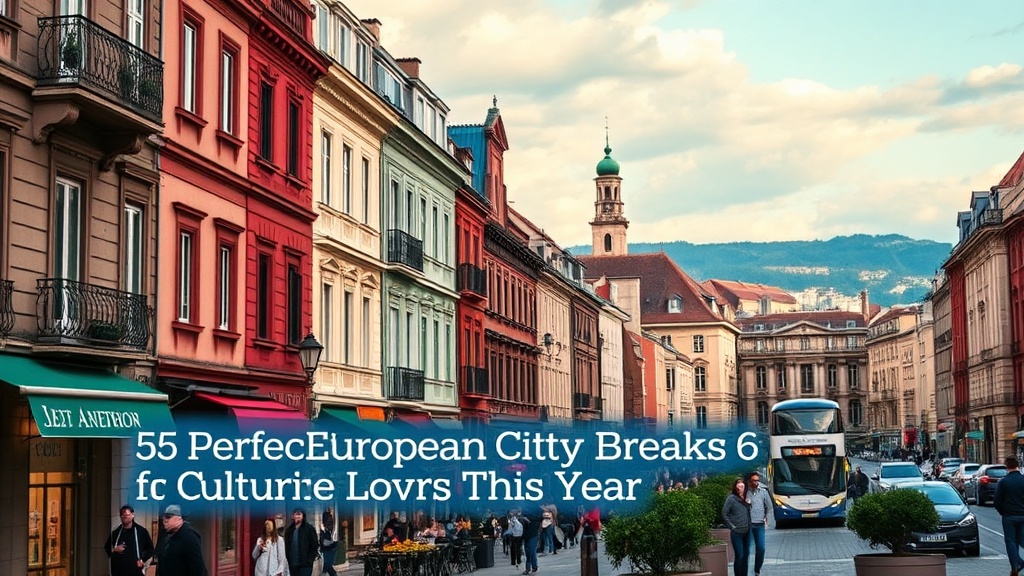
5 Perfect European City Breaks for Culture Lovers This Year

Lisbon: Portugal's Sun-Drenched Capital of Fado and Azulejos
Prague: A Fairytale City of Gothic Spires and Medieval Charm
Barcelona: Where Gaudí's Architecture Meets Mediterranean Beach Life
Vienna: Imperial Palaces, Coffee Culture, and Classical Music Heritage
Budapest: Thermal Baths, Ruin Bars, and Danube River Splendor
Europe's cities pack centuries of art, architecture, and living history into walkable centers you can explore in a long weekend. This guide cuts through the noise to highlight five destinations where culture isn't just in the museums—it's woven into daily life. You'll find practical itineraries, specific venue recommendations, and honest assessments of what makes each city worth your time (and budget).
What Are the Best European City Breaks for Art Lovers?
Florence, Vienna, and Barcelona consistently rank as the top three destinations for travelers prioritizing art and architecture. Each offers a distinct cultural flavor—Renaissance masters in Florence, Habsburg grandeur in Vienna, and modernist innovation in Barcelona.
Here's the thing about European art cities: some feel like open-air museums while others hide their treasures behind unassuming doors. The cities below deliver both experiences.
Florence: Where the Renaissance Lives
Florence doesn't just display Renaissance art—it invented the Renaissance. The Uffizi Gallery houses Botticelli's "Birth of Venus" and Leonardo's "Annunciation" in rooms that are themselves architectural masterpieces. Book tickets through the official Uffizi website at least three weeks ahead. The €20 admission beats standing in the standby line for hours.
The Duomo complex demands a full morning. Climb Brunelleschi's dome (463 steps—no elevator) for views over terracotta rooftops that haven't changed much since the 1400s. The €30 combined ticket includes the Baptistery, Museum, and Santa Reparata crypt.
That said, Florence's real magic happens after dark. The city empties of day-trippers around 6 PM. Walk across the Ponte Vecchio then. The gold shops close up, and you're left with stone arches framing the Arno River at sunset. Grab a €5 glass of Chianti at Vini e Vecchi Sapori on Via dei Magazzini—a tiny restaurant with six tables and no pretension.
Vienna: Imperial Collections and Coffee House Culture
Vienna's Kunsthistorisches Museum holds the Habsburg dynasty's art hoard—think Vermeer, Velázquez, and the world's largest Bruegel collection. The building itself, opened in 1891, features marble staircases and gilded ceilings that rival the paintings. Plan for three hours minimum.
But Vienna isn't just about imperial excess. The city's coffee houses—Café Central, Café Sacher, Café Hawelka—are UNESCO-recognized cultural institutions. You don't grab coffee to go here. You sit. You read a newspaper (they still stock them). You order an Apfelstrudel and watch the room. The €8-12 you'll spend is admission to a living museum of Central European urban life.
The catch? Vienna's museum quarter can feel overwhelming. Pick two major venues per day. The Belvedere (Klimt's "The Kiss") and the Albertina (Monet to Picasso) pair well—they're walkable, and the Belvedere gardens offer breathing room between galleries.
Which European Cities Offer the Best Value for Culture Travelers?
Prague and Lisbon deliver world-class museums, architecture, and performing arts at roughly 40% less cost than London or Paris. Accommodation, dining, and attraction tickets all cost significantly less—while the cultural density remains high.
Prague: Baroque Drama on a Budget
Prague's historic center is a UNESCO site where Gothic, Baroque, and Art Nouveau layers stack on top of each other. The Prague Castle complex—largest ancient castle in the world per Guinness World Records—spans 70,000 square meters. The St. Vitus Cathedral's stained glass windows alone justify the CZK 250 (about €10) circuit ticket.
The city's real cultural gem? The National Theatre. Czechs funded this neo-Renaissance building through public donations in 1868—literally "nation-building" through culture. Today you can catch opera, ballet, or drama for CZK 100-890 (€4-35). The building's gold-crowned roof and painted ceilings rival any performance.
Worth noting: Prague's tourist center is compact. You can walk from Wenceslas Square to the Charles Bridge to the Castle in under an hour. That said, venture to Žižkov or Vinohrady neighborhoods for dinner. Lokal serves tank beer (unpasteurized Pilsner Urquell) and traditional Czech fare at prices that haven't changed much since the 1990s.
Barcelona: Gaudí and Beyond
Barcelona bends the rules. Is it Spanish? Catalan? Both—and that tension creates a cultural energy you won't find elsewhere in Europe. The city's modernist architecture (what outsiders call "Gaudí style") transformed the urban space in the early 1900s.
The Sagrada Família is the obvious must-see. Construction started in 1882 and continues today—completion is projected for 2026, the centenary of Gaudí's death. Buy tickets online (€26 basic, €36 with tower access) because daily capacity is capped. The interior forest of stone columns and stained glass can't be overstated. Photos don't capture the scale.
Less crowded but equally significant: the Hospital de Sant Pau. This UNESCO-listed modernist complex—designed by Lluís Domènech i Montaner, not Gaudí—features underground tunnels connecting pavilions with ceramic domes and stained glass. It's a 10-minute walk from Sagrada Família but receives a fraction of the visitors. The €16 admission includes an excellent audio guide.
How Many Days Do You Need for a European City Break?
Three full days hits the sweet spot for most European cultural destinations—enough to see major museums without rushing, plus time to absorb the city's rhythm. Two days works for compact cities like Florence or Prague; four days lets you add day trips or simply slow down.
| City | Minimum Days | Ideal Days | Must-Book Ahead | Daily Budget (Mid-Range) |
|---|---|---|---|---|
| Florence | 2 | 3 | Uffizi, Accademia, Duomo dome | €150-200 |
| Vienna | 3 | 4 | State Opera, Kunsthistorisches | €180-250 |
| Prague | 2 | 3 | Black Light Theatre, concert tickets | €80-120 |
| Barcelona | 3 | 4 | Sagrada Família, Park Güell | €140-190 |
| Edinburgh | 2 | 3 | Castle, August festival events | £120-160 (€140-185) |
Edinburgh: Festival City Year-Round
Most travelers know Edinburgh for the August festivals—Fringe, International, Book, Art. The city population doubles. Accommodation prices triple. The energy is unmatched, but you'll need to book hotels six months ahead.
Here's the thing: Edinburgh's cultural calendar runs all year. The Royal Scottish National Orchestra performs weekly at the Usher Hall. The Scottish National Gallery (free admission) holds Raphaels, Titians, and Monets in a neoclassical building that opened in 1859. The Writers' Museum—tucked down Lady Stair's Close off the Royal Mile—celebrates Burns, Scott, and Stevenson in a 17th-century townhouse. No crowds. No tickets required.
The city's architectural drama unfolds along the Royal Mile, from the volcanic plug of Edinburgh Castle down to the Palace of Holyroodhouse (the Queen's official Scottish residence). Walk it early morning before the tartan shops open. Then detour through the closes—narrow alleyways that slice between buildings like Mary King's Close (a preserved 17th-century street underground, €20 entry).
Worth noting: Edinburgh's weather is unpredictable. Pack layers. The horizontal rain that sweeps across Arthur's Seat doesn't care about your itinerary. That said, grey skies suit this city. The stone buildings look more dramatic. The pubs feel cozier. The Devil's Advocate on Advocates Close serves craft cocktails in a 19th-century former pump house—ideal for waiting out a shower.
Practical Tips for Booking Your Culture-Focused Trip
Museum passes can save money but often waste time. The Firenze Card (€85, 72 hours) sounds appealing until you realize it forces rushed museum-hopping. Better to pay individual admissions and actually see what you came for.
City cards—Vienna City Card, Barcelona Card, Prague Visitor Pass—vary in value. Calculate your actual planned visits before buying. The transport inclusion usually justifies the cost in spread-out cities like Vienna; in compact Prague, probably not.
The catch with European city breaks? You're walking 15,000-20,000 steps daily. Comfortable shoes matter more than almost anything else you pack. Blistered feet ruin museum visits faster than bad weather.
Book restaurants, not just museums. The best places in Florence, Barcelona, and Edinburgh fill up. Use TheFork or OpenTable—or email directly. A 7:30 PM reservation at Osteria Francescana in Florence (if you can get it) or Disfrutar in Barcelona transforms a trip. But honestly? The €12 bocadillo de jamón eaten standing at Can Paixano in Barcelona's Barceloneta neighborhood delivers cultural insight too—just a different kind.
Finally, leave gaps. The best European city breaks include unplanned hours. A discovered courtyard in Prague's Malá Strana. An unexpected street performance on Edinburgh's Royal Mile. A neighborhood bakery in Vienna's 7th district that isn't in any guidebook. Culture isn't only in the ticketed venues. It's in the accidental encounters that happen when you're not rushing to the next checkpoint.