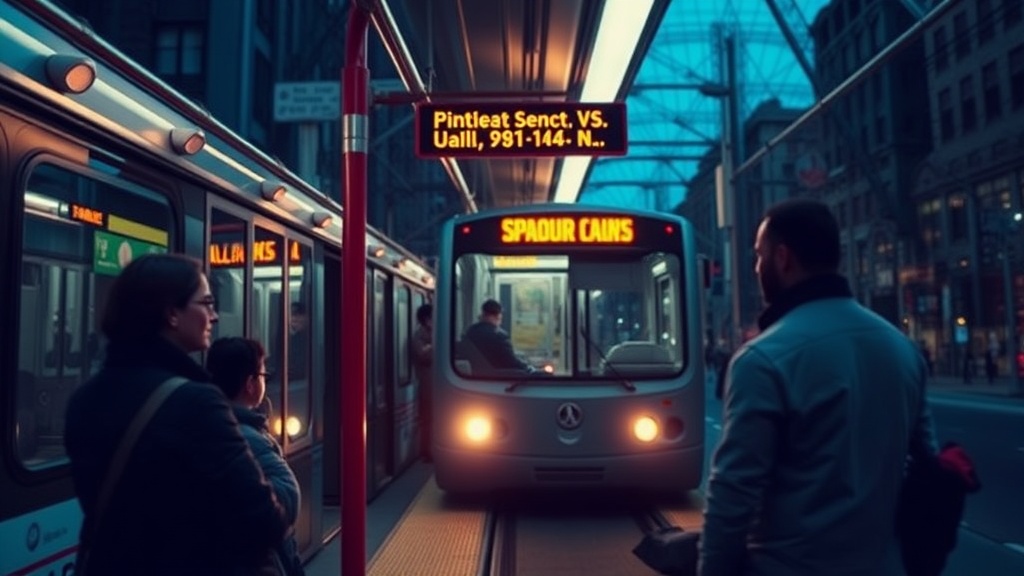
How to Use a City's Public Transit System Like Someone Who Lives There

This post will teach you how to move through an unfamiliar city using buses, trains, trams, and subways—without looking like a lost tourist. You'll learn how to read transit maps efficiently, pay fares correctly, avoid common mistakes that mark you as an outsider, and blend in with locals who use these systems daily. Whether you're visiting London for a week or spending a month in Tokyo, these practical techniques will save you money, time, and the subtle embarrassment of holding up a turnstile line.
Why Bother Learning the Local Transit System?
Taxis and rideshares are convenient—there's no denying that. But they also insulate you from the rhythm of a place. When you ride the metro in Mexico City or catch a bus in Istanbul, you're participating in the daily routine of thousands of locals. You see neighborhoods transition from commercial districts to residential streets. You overhear conversations (even if you don't understand them). You develop an intuitive sense of how the city fits together.
Beyond the cultural immersion, there's the practical matter of cost. A single subway ride in New York costs $2.90—an Uber across Manhattan can easily run $25-40 during peak hours. Over the course of a week-long trip, those savings add up to several nice meals or a museum membership. And in cities with notorious traffic—Bangkok, Jakarta, Los Angeles—transit often gets you there faster.
How Do I Figure Out the Fare System Before I Arrive?
Every city handles payment differently, and nothing marks you as a newcomer quite like fumbling with coins at a ticket machine while locals stack up behind you. Do your homework before you land.
Start with the official transit authority website. For London, that's Transport for London. For Paris, it's RATP. These sites will tell you whether the system uses contactless credit cards (increasingly common), reloadable transit cards, single-ride tickets, or mobile apps. Some cities—like Tokyo and Seoul—have complex fare structures based on distance traveled. Others—like New York and Mexico City—charge a flat rate regardless of how far you go.
Download any official transit apps before you leave home. Citymapper and Google Maps work well for navigation, but many transit agencies have their own apps that provide real-time updates about delays, service changes, and alternative routes. In Berlin, the BVG app lets you buy tickets digitally and shows exactly which platform your train will arrive on. In Hong Kong, the MTR app includes station layouts—useful when you need to know which exit leads to your hotel.
Check whether your phone's contactless payment will work. London's Oyster card system now accepts Apple Pay and Google Pay at the same fare rates. Tokyo's Suica and PASMO cards can be added to iPhone wallets. But some systems—like Paris's Navigo—still require physical cards or paper tickets. Knowing this in advance prevents that moment of panic when the turnstile rejects your American Express.
What's the Best Way to Read a Transit Map?
Transit maps are abstractions—not geographical representations. The London Underground map, designed by Harry Beck in 1931, revolutionized how we visualize transit by straightening curved lines and spacing stations evenly. This makes the system readable but can distort your understanding of actual distances.
Here's a practical technique: before you study the colored lines, locate your starting point and destination on a regular map first. In many cities, what looks like a long subway ride on the transit map might actually be a twenty-minute walk above ground. Paris's Metro stations are rarely more than 500 meters apart in the city center. Sometimes walking between stations saves you the hassle of transferring lines.
Learn the difference between local and express services. New York's subway has three types of trains—locals (stopping at every station), expresses (skipping stops), and super-expresses (found on some lines). Getting on an express when you need a local will deposit you miles from your intended stop. The same applies to Tokyo's JR lines and Seoul's subway system.
Pay attention to line termini—the end stations. Trains often display their final destination rather than their direction. In Madrid, you don't catch "the northbound train"—you catch "the train to Pinar de Chamartín." Knowing your line's terminus helps you board the correct train, especially at busy interchange stations where multiple lines converge.
How Do I Avoid Looking Like a Tourist on Public Transit?
Locals have patterns—you can learn them quickly. First: stand on the right, walk on the left. This rule applies to escalators in London, Hong Kong, and most of Japan. (Exception: Osaka stands on the right, walks on the left—the opposite of Tokyo. No one knows why.) Standing side-by-side with a companion, blocking the walking lane, is a dead giveaway that you're visiting.
Have your payment method ready before you reach the barrier. Digging through your bag for a ticket while blocking the entrance creates a minor traffic jam and draws attention. In cities with tap-in/tap-out systems—London, Singapore, most of the Netherlands—remember to tap out when you exit. Forgetting this charges you the maximum possible fare.
Move decisively but don't rush unnecessarily. Locals know their routes. They walk with purpose toward specific doors on specific cars—the ones that align with their exit at the next station. You don't need to match their efficiency immediately, but avoid the hesitation that comes from checking your phone at every intersection.
Follow the local volume customs. In Tokyo, trains are libraries—conversations happen in whispers if at all. In Naples, the chaos is part of the charm—people chat loudly, gesture, and treat the carriage as an extension of the street. Observe and adapt. Nothing signals "outsider" quite like conducting a video call at full volume in a silent Copenhagen train car.
What Safety Considerations Should I Keep in Mind?
Public transit is generally safe in major cities, but awareness matters. Keep bags zipped and in front of you during rush hour—crowded platforms and cars are prime environments for pickpockets. Barcelona's metro, Rome's buses, and Paris's RER lines have reputations for petty theft, though these incidents are statistically rare.
Know the emergency procedures. Most systems have intercoms or emergency buttons on platforms and trains. In London, there's a discreet passenger alarm in every carriage. In Tokyo, station staff are famously helpful—even if you don't speak Japanese, approaching an employee with a map and pointing to your destination usually results in patient assistance.
Avoid empty cars. If a train pulls up and one car is nearly empty while others are crowded, there's usually a reason—broken air conditioning, a malfunctioning door, or occasionally a passenger causing problems. Trust the local intuition that steered everyone toward the other cars.
Have a backup plan. Transit systems fail—strikes in Paris, signal problems in New York, typhoons in Hong Kong. Keep cab fare or a rideshare app available for emergencies. Save your accommodation's address in the local language on your phone, helpful for showing taxi drivers if you need to abandon transit entirely.
How Can I Use Transit to Discover Neighborhoods I'd Otherwise Miss?
Here's where transit becomes more than transportation—it becomes a discovery tool. Pick a line and ride it to the end. Terminal stations often serve residential neighborhoods where tourists rarely venture. The Tokyo Metro's Fukutoshin Line ends at Wakoshi—a bedroom community with excellent local restaurants and none of the Shibuya crowds. London's District Line extends to Upminster, where the Thames estuary feels worlds away from Westminster.
Get off at stations with interesting names. In Berlin, there's a stop called "Onkel Toms Hütte" (Uncle Tom's Cabin)—named after a local restaurant, not the novel. In Mexico City, "Indios Verdes" has nothing to do with green Indians and everything to do with a nearby sports complex. Curiosity about station names leads to unexpected history lessons.
Time your rides to catch the rhythm of the city. The first train of the morning carries night shift workers heading home. The midday lull (roughly 10am-4pm outside rush hours) moves retirees, students, and parents with small children. Evening trains after 10pm reveal a city's nightlife—concert-goers, restaurant staff finishing shifts, couples on dates. Each time slot shows you a different slice of local life.
Some cities offer particularly scenic transit experiences for the price of a regular fare. The Docklands Light Railway in London winds through Canary Wharf's towers and past Greenwich's maritime history. Stockholm's Tunnelbana includes the "world's longest art gallery"—dozens of stations decorated with murals, sculptures, and installations. Visit Stockholm's official guide maps the artistic highlights. Pittsburgh's inclines—technically public transit—climb Mount Washington with views of the city's three rivers. These rides justify themselves as low-cost sightseeing.
The confidence to navigate a foreign transit system develops quickly—usually within a day or two of your first ride. Start with simple journeys: your hotel to a major landmark. Then expand your range. Before long, you'll be the person giving directions to other confused travelers, pointing them toward the correct platform with the casual authority of someone who belongs there.