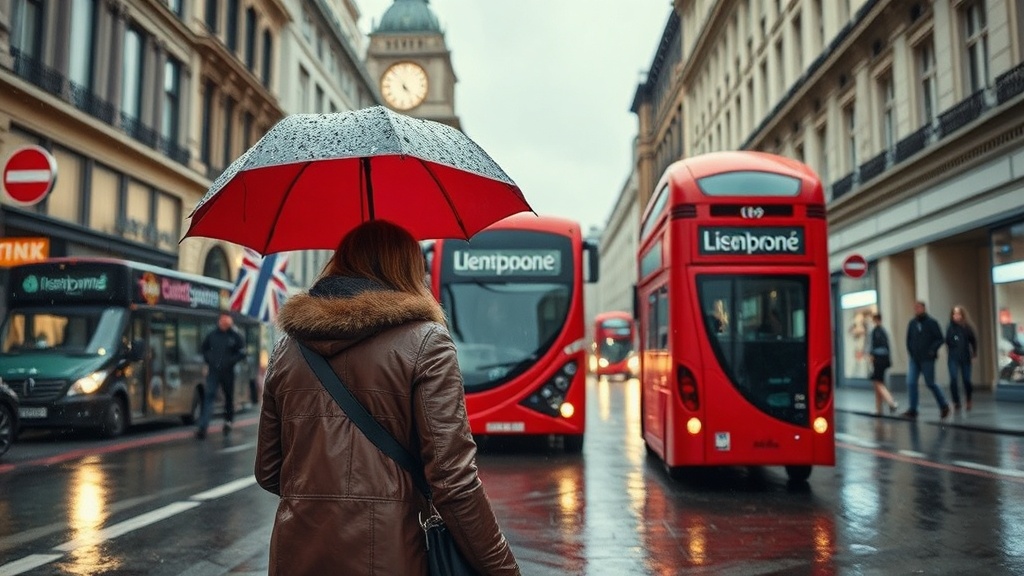
Navigating the Rainy Streets of London with Style and Ease

What You Need to Know Before Visiting London
This guide covers the practicalities of visiting London, specifically focusing on weather preparation, transport logistics, and how to move through the city without getting stuck in a tourist bubble. You'll learn how to handle the unpredictable British weather, how to use the Tube without feeling lost, and how to budget for a high-cost city.
London isn't a city you can just wing. If you show up without a plan for the rain or a way to pay for your transport, you're going to have a rough time. The weather changes every twenty minutes—one moment it's grey and drizzling, the next it's actually sunny. You'll need layers, a sturdy umbrella (or better yet, a waterproof shell), and a mindset that accepts things might go sideways.
The most important thing to understand is the sheer scale of the city. London is actually several distinct towns stitched together. You can't see the Tower of London and Camden Town in the same afternoon without spending half your day on a bus or a train. Respect the geography. Group your activities by neighborhood to avoid burnout and wasted time.
Is it Expensive to Travel Around London?
The short answer is yes, but it's manageable if you don't rely on black cabs for every single trip. Public transport is your best friend. The London Underground (the Tube) and the iconic red buses are the lifeblood of the city. You don't need to buy a physical Oyster card anymore; most people just tap their contactless bank card or phone at the gates. It's much faster and you won't be fumbling with change.
Be aware of the daily cap system. Whether you use a contactless card or an Oyster card, there is a limit to how much you'll be charged for transit in a single day. Once you hit that limit, any further rides are essentially free. This makes it much easier to wander without constantly checking your bank balance. For real-time transit updates and maps, I always suggest checking the official Transport for London (TfL) website. It's much more reliable than third-party apps when there are delays or closures.
| Transport Type | Best For | Pro Tip |
|---|---|---|
| The Tube | Speed and distance | Avoid rush hour (07:30-09:30 and 17:00-19:00) |
| Double-Decker Bus | Sightseeing on a budget | Sit on the top deck, front row for the view |
| River Bus (Uber Boat) | Scenic routes | A much cheaper alternative to a Thames cruise |
Where Should I Stay for the Best Experience?
Your choice of neighborhood will dictate the entire vibe of your trip. If you want to be in the thick of the action—theatres, big museums, and constant movement—stay near South Kensington or Covent Garden. However, these areas can feel a bit polished and, frankly, a bit sterile for some. If you want something with more grit and a younger, more creative energy, look toward Shoreditch or Hackney in East London.
For a more central, classic London feel, the areas around Bloomsbury or Marylebone offer a great balance of culture and accessibility. If you're traveling with a group or want more space, look for stays slightly outside the Zone 1 central area. Staying in Zone 2 or 3 can save you a significant amount of money on accommodation, and the connections back to the center are usually quite fast. Just make sure your hotel or rental is within a five-minute walk of a Tube station; otherwise, you'll spend more time walking than exploring.
Don't forget that London is a city of villages. Each neighborhood has its own identity. One morning you might be in a sleepy, leafy part of Hampstead, and by the afternoon you could be in the bustling, neon-lit streets of Soho. Choose your base based on what you want to do most—whether that's museum-hopping, clubbing, or finding quiet parks.
How Do I Avoid the Biggest Tourist Traps?
London is full of places that look great in photos but feel a bit hollow in person. One of the biggest ones is the idea that you need to pay a massive fee for every single sight. Many of the world's best museums—the British Museum, the National Gallery, the Tate Modern—are actually free to enter. You might have to book a timed entry slot in advance, but the core experience won't cost you a penny. You can find more details on museum booking through the British Museum website or individual museum sites.
Another trap is eating in the immediate vicinity of major landmarks like Big Ben or the London Eye. The food is often overpriced and mediocre. Instead, walk ten minutes into a side street. The quality of food improves drastically once you move away from the primary tourist thoroughfares. Whether it's a quick pub lunch or a sit-down dinner, look for places where the menu isn't translated into five different languages.
Also, don't feel pressured to do the "London Eye" or the "Shard" just because everyone else is. There are plenty of other ways to see the skyline, and some of the best views are actually free. The view from the top of the Millennium Dome or even certain public parks can give you a fantastic perspective of the city without the heavy price tag. Be intentional about what you're seeing. If you try to do everything, you'll end up doing nothing well.
What Should I Pack for a London Trip?
The most important thing you can pack is a high-quality, waterproof jacket. I don't mean a flimsy raincoat; I mean something that can actually handle a downpour. Umbrellas are fine for light drizzle, but a sudden wind-driven rainstorm will turn your umbrella inside out in seconds. A good raincoat and a pair of comfortable, waterproof walking shoes are non-negotiable. You will be walking a lot—much more than you think—and wet feet will ruin your mood faster than anything else.
Dress in layers. The temperature fluctuates significantly between the chilly outdoor air and the often-overheated Tube carriages. You'll be stripping off a jacket the moment you step underground and putting it back on the moment you exit a station. A simple scarf can also be a lifesaver for those unexpected breezy evenings.
Avoid bringing overly formal clothing unless you have a specific event in mind. While London has world-class dining and high-end clubs, the general vibe is much more casual and practical. Even in nice areas, people tend to prioritize comfort and weather-readiness. A pair of clean, stylish sneakers and a decent pair of jeans will get you through almost any situation, from a coffee shop to a mid-range gastropub.