Where Do Locals Go During the Evening Passeggiata?

What Is the Passeggiata and Why Does It Matter?
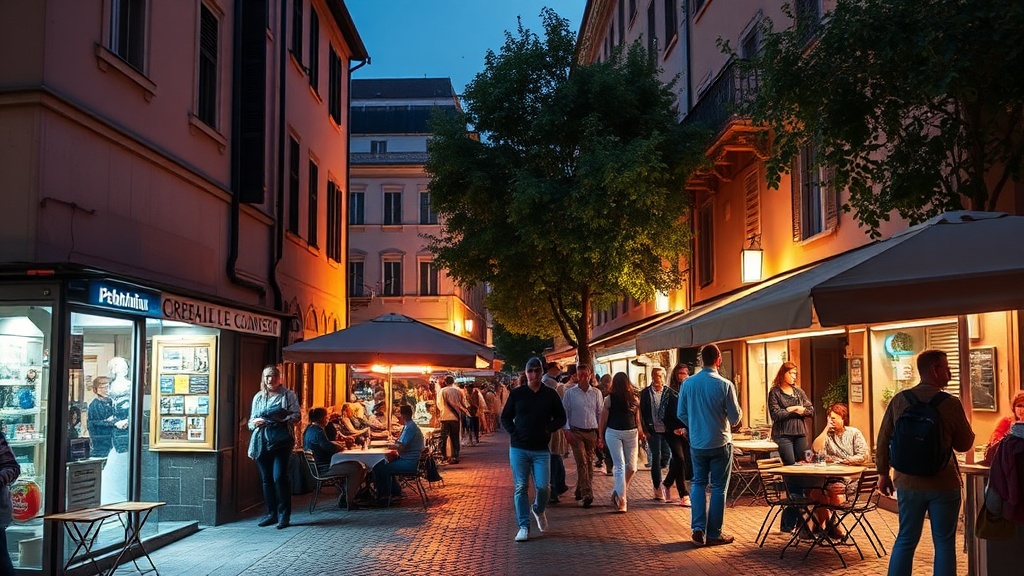
At around six-thirty on a September evening, the shop shutters begin to clatter down along Via Roma in Lucca. But the street doesn't empty—it transforms. Office workers spill onto the pavement, grandparents push strollers at a leisurely pace, and teenagers cluster in animated groups outside gelaterias. This is the passeggiata, Italy's sacred evening ritual of walking for the sheer pleasure of being seen and seeing others. It's not exercise. It's not commuting. It's a performance of civic life that has shaped Italian cities for centuries—and understanding it unlocks a side of urban Italy that guidebooks rarely capture.
The passeggiata (derived from passeggiare, to walk) serves multiple functions that reveal how Italian cities actually work. Physically, it's a way to stretch legs after a day at a desk or in a shop. Socially, it's the primary venue for community surveillance—who's wearing what, who's with whom, whose children have grown absurdly tall since last spring. And psychologically, it marks the transition from the workday to the evening, that liminal space where the city exhales collectively before dinner. If you're visiting Italy and wondering why the streets feel strangely alive at seven PM while American downtowns have already emptied, you're witnessing this tradition in action.
Which Cities Offer the Most Authentic Passeggiata Experience?
Every Italian city has its corso—the main drag where the passeggiata unfolds—but some locations elevate the ritual to an art form. In Bologna, the arcaded porticoes create a covered promenade that functions beautifully in rain or shine. The stretch from Piazza Maggiore down Via dell'Indipendenza draws thousands on Sunday evenings, creating a river of humanity flowing past shop windows lit for the occasion. The porticoes themselves—recently named a UNESCO World Heritage site—were designed for exactly this purpose: sheltering citizens as they move through the city.
Lecce, the baroque jewel of Puglia, offers a more intimate but equally compelling scene. The historic center is small enough to lap repeatedly, and locals do—circling Piazza Sant'Oronzo, stopping for a caffè in ghiaccio (iced coffee), then making another round. The architecture provides a theatrical backdrop: honey-colored limestone facades glow in the golden hour, and the Roman amphitheater sits quietly as it has for two millennia, watching the procession continue. What distinguishes Lecce is the absence of tourists from the ritual itself—most visitors are dining by eight, while the passeggiata belongs to locals until ten or later.
Then there's Trieste, that odd Habsburg outlier pressed against the Slovenian border. Here the passeggiata happens along the seafront, the Rive, where the Adriatic stretches toward Croatia and the wind carries salt and espresso and the ghost of James Joyce (who wrote much of Ulysses here). The crowd is older, more reserved, with a distinct Central European flavor. Men wear jackets regardless of temperature. Women walk arm-in-arm. The passeggiata in Trieste feels borrowed from another empire entirely—which, historically, it was.
How Should Visitors Participate Without Looking Like Tourists?
The first rule is sartorial: dress slightly better than you think necessary. The passeggiata is fundamentally about presentation, and athletic wear reads as a declaration of war against civilization. You don't need formal attire—think dark jeans, a pressed shirt, leather shoes that aren't hiking boots. Italians notice shoes. They always have. The second rule is pace: slow. Slower than that. The passeggiata has no destination, and walking with purpose marks you as someone who doesn't understand the assignment.
Third, embrace the stop-and-chat. If you're traveling with companions, pause frequently. Point at windows. Discuss what you observe. The passeggiata is participatory theater, not a march. If you're alone, the gelateria provides your social cover—stand at the bar (never sit at a table if you want the local price), eat your cone, watch the passing parade. You'll notice something interesting: Italian eye contact during the passeggiata is direct but brief. A nod, a half-smile, then eyes forward again. It's acknowledgment without intrusion, a social contract that keeps the street safe and welcoming.
Fourth, timing matters. The passeggiata begins as shops close—typically six-thirty to seven PM—and continues until dinner, which in most Italian cities means eight-thirty to nine-thirty. In smaller towns, it may start earlier and end earlier. In summer, it stretches past ten PM, when the heat finally breaks. Missing the passeggiata window means missing the city's social heart entirely. That hour when streets elsewhere are dead? In Italy, that's when the city is most alive.
What Does the Passeggiata Reveal About Italian Urban Design?
Italian cities were built for this ritual in ways that contemporary urban planning often forgets. The narrow centro storico streets force human-scale interaction—no car can speed through a medieval passage barely wider than a cart. The piazzas provide natural gathering points, architectural rooms where the procession pauses and concentrates. The ground-floor shops (the piano terra) keep eyes on the street, following Jane Jacobs's principles of natural surveillance decades before she articulated them. The passeggiata only works because the built environment supports it.
Compare this to many American downtowns, designed for automobile throughput rather than pedestrian lingering. You can't have a passeggiata on a six-lane arterial road. You can't have one where buildings turn blank walls to the street or where parking lots interrupt the pedestrian realm. The passeggiata requires what Italian urbanists call continuità del fronte—the continuity of building facades that defines public space and makes walking feel enclosed, protected, social. This isn't nostalgia. It's engineering for human connection.
The ritual also explains Italian resistance to Sunday shopping and late-night retail hours. These policies aren't economic ignorance—they're preservation of protected time for the passeggiata and the family meals that follow. When shops close, streets belong to people. This trade-off—commerce versus conviviality—reads as backwardness to some economists. Walk a crowded corso on a Sunday evening and judge for yourself.
Can the Passeggiata Tradition Survive Modernization?
Every year, someone declares the passeggiata dead. Young people are on their phones. Retail is dying. Remote work has scrambled schedules. Yet the ritual persists—mutated, perhaps, but stubbornly present. In Milan, Italy's most frenetic city, the passeggiata has colonized new territory: the Navigli canal district, where aperitivo culture has grafted onto the traditional stroll, creating a hybrid that draws both locals and visitors into the same social space. In southern cities like Palermo, the passeggiata has absorbed immigrant communities—Senegalese street vendors, Bangladeshi shopkeepers—into its choreography, the faces changing while the ritual remains.
The smartphone has altered the passeggiata without killing it. Yes, you'll see teenagers walking in clusters, each staring at a screen. But look closer: they're still together, still moving through public space, still performing their presence for the watching city. The passeggiata was always partly about display—clothes, relationships, status. Social media extends that display to digital networks without replacing the physical one. The street and the screen coexist, feeding each other. A striking outfit photographed on the corso becomes Instagram content; the Instagram discovery of a new gelateria drives foot traffic to the physical location.
What threatens the passeggiata isn't technology or changing values—it's the same forces threatening walkable urbanism everywhere. Rising rents push young families to car-dependent suburbs. Short-term rentals hollow out historic centers, replacing resident-owned apartments with tourist accommodations where no one knows their neighbors. Traffic congestion makes streets unpleasant for strolling. These are policy choices, not inevitable trends. Cities that want to preserve their passeggiata culture (and the tourism revenue it generates) must choose differently—limiting vehicles in historic centers, protecting residential character, investing in public space maintenance.
The passeggiata teaches something valuable about sustainable urban life. It requires no consumption beyond a gelato or a coffee. It creates social connection without organized activity. It keeps streets safe through collective presence rather than surveillance technology. It bridges generations—grandparents, parents, children all sharing the same space, moving at the same pace. In an age of isolation and polarization, these are not small achievements. The evening stroll may look like charming local color to tourists, but it's actually infrastructure for social cohesion. Italian cities figured this out centuries ago. The rest of us are still catching up.